
Scratching that itch again with Google DeepMind, WRI and IIASA releasing Forest Typology (ForTy). It is a 10m global map separating primary, regenerating, planted and plantation forest from tree crops, with an annual series from 2017 to 2025. The excitement is understandable. Canopy cover alone has always been gameable, and typology closes part of that gap.
But nine years is a short memory for forests.
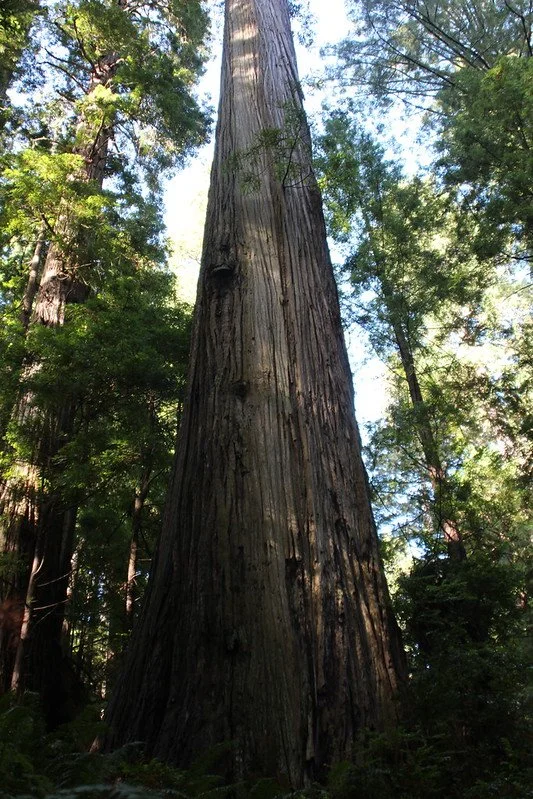
Big tree! © Jed Cutler, 2023
In a 2017–2025 series, 2017 becomes year zero. Conversion that happened before then isn’t change. It’s simply the landscape. Plantations established on cleared forest in the decade before look like settled land use, and the frontier producer converting today looks like the villain. That inverts the polluter pays principle. It is exactly the false baseline that supply chain critique, ESG scoring and forest finance will now inherit.
EUDR already embeds a legislated amnesty: anything converted before 31 December 2020 is out of scope. That was a political choice. ForTy risks making it look like a scientific one. Even “primary versus naturally regenerating”, the distinction EUDR’s degradation test turns on, is a judgement about history that a model anchored in 2017 can only partly see.
Two further points deserve attention:
Thresholds: Per-class probabilities are useful, but they hand the choice of threshold to the party being assessed.
Evidence: A map is risk screening, not evidence. Due diligence still turns on plot-level geolocation and legality.
None of this argues against the dataset. It argues for provenance alongside it. That means declared temporal anchors, linkage to the longer Landsat record, and disclosure of the thresholds behind any compliance claim.
Optimistic about the tool. Honest about the baseline (problem) #thebaselineproblem is not just me
Technical footnote - I’ve asserted that the history is recoverable from Landsat. That is true of the imagery, but ForTy’s dependence on AlphaEarth embeddings, which start in 2017, is the architectural reason it isn’t used iiuc.